Showing posts with label Support your local farmers. Show all posts

Tuesday, November 17, 2009

Food of the Week: Soybeans

Food of the week: Soybeans

The nutritional benefits of soy have been sensationalized in the US in the past few years. It is true, the soybean does tout many health benefits. However, we have recently seen concerns emerging over the newly popular and widely used food. These concerns relate to both nutritional aspects and the way in which the soybean is mass-produced here in the US and in other parts of the world as well. Let’s take a look at the many sides of soy.


Photo Courtesy of thedailygreen.com


Benefits:

  • Excellent source of protein, which is why soy is commonly used as a replacement for meat.

  • Unlike meat, soy does not contain saturated fat or cholesterol and may actually lower cholesterol levels.

  • Good source of Omega-3 fatty acids, iron and magnesium

  • Fiber!

  • Soy increases levels of nitric oxide, which help to prevent atherosclerosis (Coronary Artery Disease)

  • Isoflavones in soy help to protect heart and bone health in post-menopausal women

  • The protein and fiber in soybeans help to stabilize blood sugar for people with diabetes. In fact, studies have shown that a diet including soy may help to prevent type 2 diabetes.

  • Soybeans contain Choline, which may lessen chronic inflammation

  • Additional benefits may include gastrointestinal wellness and protection against prostate cancer

Drawbacks:

  • Purified soy products (ie soy milk), often used in the US, do not have many of the health benefits of whole soy foods. These products can actually stimulate pre-existing breast tumors.

  • 85% of soybeans produced in the US are genetically modified. There are no additional restrictions on genetically modified soybeans, they are treated the same as regular soybeans.

Ways to eat Soybeans:

  • As an appetizer, side or snack, blanch Edamame (soybeans in their pods)

  • Eat tofu or tempeh as a meat substitute

  • Use soybeans in Stir-Fry or Pasta

Little Known Facts:

  • Soybeans are the most widely grown bean in the world.

  • The origins of the soybean go back to China over 1300 years ago

  • Most soybeans produced end up being used as feed for cows, chickens and pigs (not their natural dietary choice, it helps to make their stomachs explode or get infections, but I digress….)

So it does appear that soybeans really do offer a lot of nutritional benefits, if you eat whole soy rather than refined products. As always, we need to know where our food is coming from and what has been done to it. This is not always an easy thing to do. There was an excellent documentary made this year about the food industry in the US called Food, Inc. There was a segment about soybean production that I don't think you would want to miss.

Thursday, July 23, 2009

Recipe of the Week: Penne with Beets, Beet Greens, Goat Cheese and Walnut

I have been so excited to use my fresh produce from the farmer's market. I started off the week by using a recipe from the association that coordinates my local farmer's market. It is a great pasta dish that uses my new favorite thing in the world, goat cheese, and something I've never really known what to do with, beet greens.

Just a forewarning, this makes A LOT of pasta. Be prepared to feed an army or have leftovers for days, maybe even weeks.

Penne with Beets, Beet Greens, Goat Cheese and Walnuts
2 bunches beets, with greens, trimmed and scrubbed - Save the beet greens (side note: I didn't actually get my beets at the farmer's market, I know....but they didn't have the beets with the greens still attached, so I had to go to my local supermarket.)
8 oz whole wheat penne
1/4 extra-virgin olive oil
1/4 cup heavy cream
4 garlic cloves, thinly sliced
1 tbsp chopped tarragon (I couldn't find this so I used basil instead)
1/4-1/2 tsp red pepper flakes
4 oz fresh goat cheese, crumbled (1/2 cup)
3/4 cup walnuts

Preheat oven to 400 degrees.

Bake beets wrapped in foil for about 45 minutes. In the meantime, wash the beet greens and cut into 1/2 inch wide strips, set aside. When the beets are done, cool them under cold water and peel skin off. Trim ends and cut into 1/2 inch thick slices.


Cook pasta until al dente, about 8 minutes.

In a skillet, heat oil. Add garlic, basil, and pepper flakes, cook about 1-2 minutes. Add beets and greens, until the greens are wilted.


Drain the pasta and add it to the pan. Stir in goat cheese and creme and bring to a simmer. Season with salt and pepper. Sprinkle with walnuts.

Serve immediately.


By the way, I've been fine with eating beets from a can. It just seemed like too much work to cook them in the oven. But, it was so worth it. They smelled so good! No more canned beets for me.

Should you eat a sizable portion of this beety meal, just be prepared for a health freak-out the next day. Just a warning. You're probably not hemorrhaging. But, who am I to say? I'm no doctor.


And here's my kitty. She does not eat beets. She's cute, isn't she? Sweet? Well....

Monday, July 20, 2009

Menu Plan Monday: Week of July 20, 2009

I made a little trip to the farmer's market yesterday and got some fresh goods. I picked up some very fresh tomatoes, peaches, zucchini, basil, cucumber and goat cheese (I have recently developed a fondness for goat cheese). Now I'm excited to prepare some meals with these ingredients.

Monday
Breakfast: Mini bagel with PB, plus a few slices of Cheese and Apples
Lunch: Turkey Sandwich
Dinner: Avocado Salad with Red Onion and Cucumber, and White Corn on the Cob with butter, Parmesan cheese, lime and chili pepper

Tuesday
Breakfast: Chai Latte and breakfast burrito
Lunch: Leftover Beet and Goat Cheese Pasta (Recipe soon to be posted)
Dinner: Birthday dinner for a friend

Wednesday
Breakfast: Bagel with Vegetable Cream Cheese
Lunch: Leftover Beet Pasta (I will be eating this for days)
Dinner: Pizza with friends

Thursday
Breakfast: Chai Latte and breakfast burrito
Lunch: Avocado Salad and PB Sandwich
Dinner: Mini Pizzas with Goat Cheese and Zucchini

Friday
Breakfast: Bacon, Egg and Cheese Sandwich
Lunch: Leftover Mini Pizzas
Dinner: Out


Sunday, March 8, 2009

Treatment of food industry workers

It’s time to get serious, Accidental Epicure readers. I blog a lot about the happy side of food, whether recipes or shared experiences of food with friends. But, I think it’s super important, when we eat the food we are fortunate enough to enjoy, to be mindful of where the food has come from and how it got to our plates. Therefore this post focuses on some recent news and current conditions of workers in the food industry.

I was listening to WNYC, an affiliate station for NPR here in NYC, yesterday. One of my favorite shows on the station, the Brian Lehrer Show, had two guests who talked about slavery of farm workers in Florida. It piqued my interest and inspired me to write a post about where our food comes from. If you’ve read/seen Fast Food Nation, or have read up on the treatment of food industry workers, many who are undocumented immigrants working to send money back to their families at home, than this may not be much of a surprise. Even so, it’s a disgusting way to treat people and no one should ever have to endure slavery in any form.

At the most superficial level you can see what is happening. Companies hire undocumented workers for less money, no benefits and no protections because the workers won’t complain due to fear of deportation. Although the conditions are horrific, immigrant workers still come because they can make more money than if they were to stay in their native country. It’s a sad case when companies and people exploit this scenario with no respect for human life. Luckily there are organized groups taking a stand against this.

You may be asking what this has to do with you. You (hopefully) are not the one running the company or enslaving workers. But, the companies guilty of these crimes do not work in a vacuum. Please consider the following things:

-These kinds of systems function because of our demand for the products, whether direct or indirect. If we, in large numbers, boycott these foods, we no longer support the abusive practices and companies will have to change their ways or go out of business.

-Fast food restaurants and chain stores provide mass consumption of produce and meat. They do this to provide a service to the crap load of people who eat fast food. If you get the fast food industry to change their practices, it makes a HUGE affect on the food industry.

-When foods are out of season in our region we have to get them from elsewhere. We cannot support our local farms and must branch out to areas where these foods are common. This allows for large conglomerate companies to exploit workers in the areas where the food is. Since there is high demand, they need a lot of (cheap) help.

So it’s not so simple then. We are not outside of the boundaries of an abusive system. The system needs us to work. The most basic way we can help to prevent slavery of food industry workers is to be knowledgeable about where our food comes from. Simply do not buy food from companies who support this. Tell your friends to boycott them as well.

As far as grocery stores refusing to purchase produce from the tomato growers mentioned on the radio show, Whole Foods is the only one who has done so. We all know that Whole Foods is a bit expensive. The reason why your food is so cheap may have something to do with the small amount the company pays its workers. Times are hard but does that give us license to support the abuse of other human beings? If you must have something cheaper, many areas have local co-ops and farmers markets. If your area does not, maybe something needs to be done about that. These things will only come with demand.

We are responsible for the treatment of the people who pick and prepare our food. We can easily ignore this, because we are distanced from it. But by doing so, we are only allowing it to happen. The companies will not change unless there is an incentive to do it. There will be no rush of conscience. Justice may be brought to a company, but another one will do the same thing in its place. This is a capitalist system and therefore companies change policies based on what brings them business. We are their business, so we need to affect change with what we purchase and use in our daily lives.

I’ve really only touched on the tip of the iceberg with this post. I encourage you to continue researching and paying attention to this. Once you allow yourself to see what’s going on, it becomes much harder to ignore. You will not believe what you see!

Wednesday, October 29, 2008

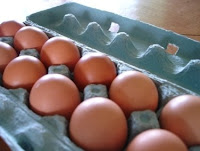
Food of the week: Eggs

Eggs have always been one of my favorite foods around. They are eaten in so many tasty ways, how could you not love them? Now that I've done some research about eggs, I'm even more convinced of their necessity in our lives. The nutritional benefits heavily outweigh the few drawbacks (for most people) and eggs are used for so many things. Plus they're just so gosh-darn tasty!


Benefits:

Drawbacks:
  • Very high in cholesterol (but saturated and trans fats have much bigger effects on blood cholesterol levels than cholesterol in food.) The cholesterol is in the yolk of the egg. To cut out cholesterol, just use the whites.
  • If not properly stored and cooked, could lead to salmonella poisoning.

Ways to eat eggs:
  • Scrambled, poached, or fried with sides of potatoes and bacon (fakin’ bacon if you choose).
  • Omelets filled with whatever your heart desires! This heart desires green peppers, onions and cheddar cheese.
  • Eggs are the ingredient in baked goods that make it “risky” to eat the dough.
  • Soak some sliced pieces of a baguette in a mixture of eggs, milk, vanilla and cinnamon. Griddle and Viola! French Toast!
  • Hard boiled eggs are good in a variety of ways; cut up in a salad, egg salad sandwiches, deviled eggs, and plain with a few sprinkles of salt.
  • Quiche!
  • Eggs Benedict is favorite brunch entrée of mine.
  • Souffles and Meringues are made by beating egg whites vigorously, which increases their volume 6-8 times.

Little known facts:

  • If you do not store eggs in a container, they will absorb the odors around them.
  • The color of the egg (white or brown) depends on the breed of the hen.

Final Note:
As with much of the meat-packing industry, the egg industry draws into question the treatment of egg producing hens. We see a lot of “Cage-Free” eggs around now, which you would think would be more humane for the chickens. However, many stories have come out in recent years about the truth behind cage-fee chickens. As always, my recommendation is to buy eggs from your local farmers. That is, unless your local farmer is a mass-meat/egg producer that lines it’s animals up in small cages and feeds them things that make their stomachs explode.

Thursday, October 2, 2008

Urban farms - a brilliant concept!

Will Allen of Milwaukee just got a McArthur Genius Grant for his organization Growing Power. It utilizes people in the community and it produces local food (both meat and produce) for an urban area. He additionally wants to expand to teach people to do similar things in their communities and use the system as a way to fight racism. I've seen some similar things (but not quite as large or successful) happening in New York City. It's a new way of farming and feeding ourselves, and I think it's great!

We’re having to go back to when people shared things and started taking care
of each other. That’s the only way we will survive. What better way than to do
it with food? - Will Allen

Of course, the idea of urban farming is not a new idea. Many cities around the world have urban farms of their own (this can be seen by doing a quick google search). Farming has also been a way to give kids opportunities to be involved with harvesting food and interacting with wildlife.

Thursday, September 11, 2008

Food of the week: Bacon!

Food of the week: Bacon

You knew it was coming!

I once went on a date with a guy who said to me, “I think bacon should be its own food group. I mean, there are so many kinds, Canadian, turkey, pancetta…”. Unfortunately that was the only interesting thing he had to say that evening and alas, it was not meant to be. But, he sure made a great point about bacon!

If you eat meat, chances are you eat bacon. I’ve even heard of people who stopped eating meat, with the exception of bacon. What is it about this tasty portion of pig that lures so many people? The smell? The crisp, yet tender, texture? The savory flavor? Whatever it is, it’s delicious!!!!

(Side note: If you’re dating someone who is vegan, it is generally not a good idea to talk about how much you like bacon. They tend not to have the same affection for it.)


Benefits:

  • It was hard to find any nutritional benefits of bacon. It has lots of protein, that’s for sure.
  • Also, if you eat only a few slices, there are not that many calories (if you like a high calories from fat to calories ratio).
  • Most of the benefits have to do with taste and comfort.


Drawbacks:


Ways to eat bacon:

  • Never underestimate the deliciousness of the traditional BLT. Throw in an avocado for a BLAT.
  • I have 3 words for you – bacon, eggs and hashbrowns!!!!! Ooh, put it all on some toast and have a tasty sandwich!
  • A bacon and apple sandwich (granny smith apples work best)
  • This was recommended to me. I don’t so much eat seafood, but some of you may and I don’t want to exclude you – scallops wrapped in bacon. I was told this would make me want to eat seafood.
  • See http://startcooking.com/blog/395/50-Ways-to-Use-Bacon for additional ideas.


Cooking tidbit:
My vegetarian roomie offered up this tip for cooking bacon that she found in a magazine. It may have had something to do with the strong bacon flavor that took over the apartment when I would pan-fry bacon. Whatever the reason, this method for cooking bacon is really great. Instead of pan-frying, lay slices of bacon on a cookie sheet and put in a 350 degree oven for about 15 minutes. No worries, there is still the essence of bacon in the room, but it is not quite as all-consuming as pan-frying. Also, you do not have to flip the bacon or worry about spitting oil when you use the oven method. *I would also like to send a thank you to my roomie for being tolerant when I cook bacon. I try to do it when she’s not home, but it doesn’t always work out that way. Thanks BG!*

Little know facts (a.k.a. some people take their love of bacon a little too far):
Bacon is so great, there are many blogs solely dedicated to it.
http://www.baconunwrapped.com/
http://www.iheartbacon.com/
http://baconshow.blogspot.com/
http://www.maganda.org/blog/index2.php

Bacon can double as clothing?

Why floss with a boring old string, when you can use bacon-flavored floss? Ewww!

Best bacon quote: "Bacon is sex in a skillet. It's the ultimate aphrodisiac for all living things. Except pigs, of course." Dan Philips of the Grateful Palate.

Last words: I try my best not to support the meatpacking industry for several reasons (locally produced meats are healthier, less tortuous for the animals and there’s less indecent treatment of factory workers). So, while I am a fan of bacon, I always try to buy it from local farmers. I ask of you too, to frequent your local farmer’s market, if possible (you can get lots of good produce there too). Support your local farmers!

***Remember this oldie? I feel like this could be a man as well as a dog.****